Bodrum
Mausoleum
Bodrum Municipality
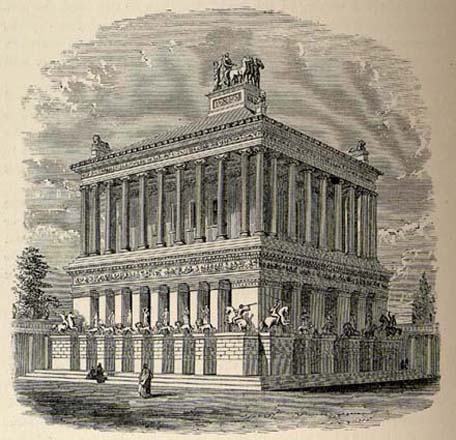
The Mausoleum at Halicarnassus, one of the Seven Wonders of the Ancient World, was the monumental tomb of Mausolus, King and Satrap of Caria under Persian rule. Its construction was begun during Mausolus’ lifetime and continued after his death by his wife and sister, Queen Artemisia II. The structure later became known as the Mausoleum in honour of Mausolus.
As one of the most significant rulers of his period, Mausolus sought to immortalise his name through this extraordinary monument. Built in the heart of ancient Halicarnassus, the tomb commissioned for him by Artemisia II was regarded as one of the most remarkable architectural achievements of its age.
The Mausoleum stood for centuries. However, much of the structure was severely damaged by an earthquake in Anatolia on 8 August 1304. In the following centuries, many of its stones were removed and used in the construction and fortification of St Peter’s Castle, later known as Bodrum Castle. In 1857, the remaining relief sculptures and statues from the tomb were taken by British archaeologists to the British Museum.
With its innovative architectural design, the Mausoleum challenged the conventions of its time. The Fisherman of Halicarnassus, known in Turkish as Halikarnas Balıkçısı, described the boldness of its architecture in these words: “Just imagine it! To set aside all tradition and create something entirely new… It would drive a person mad. Even thinking about such a challenge fills me with the excitement of trumpets and drums.”
Considered one of the Seven Wonders of the Ancient World, the Mausoleum combined elements of Greek architecture, particularly its columns, with Egyptian influence seen in its pyramid-shaped roof. Its importance was so great that, in later periods, monumental tombs built in a similar style came to be known as mausoleums. Today, the site serves as an open-air museum and offers valuable insight into the culture, art and life of the ancient world.
Ancient writers state that the architect of the Mausoleum was Pytheos, who is also associated with the Temple of Athena. Vitruvius records that some of the most important sculptors of the 4th century BC, including Bryaxis, Timotheos, Leochares and Skopas, worked on the monument. Bryaxis, who was from Caria, is believed to have created the statues of Mausolus and Artemisia standing in a four-horse chariot at the very top of the Mausoleum.
Address: 1618. Street, Yeniköy Mahallesi, 48440 Bodrum